


Sacramento Bee columnist Dan Walters examines both state and Census Bureau growth figures for California, concluding that the significant difference is less important than what the huge growth means for the future of the nation's most populous state.


The California Department of Finance pegged state growth at almost 438,000 new residents for the calendar year ending July 1, 2007, while the Census Bureau reported 300,000 residents for a total of 37 million people – one million less than the state's count.
"Whatever the true figure, the new data are another reminder that California remains an ever-expanding and ever-changing society, and dealing with that fact is its most important and most neglected political issue.
The single most important factor in California's population growth is a continued high rate of births. Baby production declined somewhat in the 1990s, thanks largely to a severe recession that propelled more than a million Californians to leave the state in that decade, but has picked up sharply in this decade. And that means that the leveling-off of school enrollment – and even declines in some communities – will end soon as a new wave of youngsters hits the classroom.
When one drills into the data, the fuller dimension of California's population growth – the absolutely unique level of cultural and ethnic diversity it has generated – becomes evident.
The state's white population is continuing to decline, at least in proportionate terms, and already is well below 50 percent, while Latino and Asian American communities expand, driven by high immigration and/or birth rates...Immigration itself is the single most important issue to California voters, several polls have established, and we have seen sharp political clashes over it and such issues as affirmative action and bilingual education.
Growth and cultural change, moreover, when coupled with economic evolution, drive both the state's perpetual budget crisis and the angst over extending health insurance to millions of working poor families."
Thanks to Patricia Matejcek
FULL STORY: Dan Walters: Population increases drive state


Depopulation Patterns Get Weird
A recent ranking of “declining” cities heavily features some of the most expensive cities in the country — including New York City and a half-dozen in the San Francisco Bay Area.
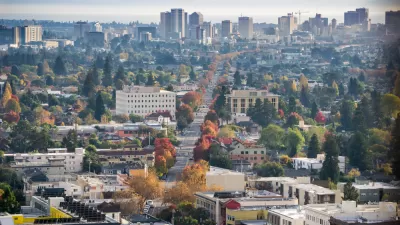
California Exodus: Population Drops Below 39 Million
Never mind the 40 million that demographers predicted the Golden State would reach by 2018. The state's population dipped below 39 million to 38.965 million last July, according to Census data released in March, the lowest since 2015.

Pennsylvania Mall Conversion Bill Passes House
If passed, the bill would promote the adaptive reuse of defunct commercial buildings.

Google Maps Introduces New Transit, EV Features
It will now be easier to find electric car charging stations and transit options.

Ohio Lawmakers Propose Incentivizing Housing Production
A proposed bill would take a carrot approach to stimulating housing production through a grant program that would reward cities that implement pro-housing policies.

Chicago Awarded $2M Reconnecting Communities Grant
Community advocates say the city’s plan may not do enough to reverse the negative impacts of a major expressway.
City of Costa Mesa
Licking County
Barrett Planning Group LLC
HUD's Office of Policy Development and Research
Mpact Transit + Community
HUD's Office of Policy Development and Research
City of Universal City TX
ULI Northwest Arkansas
Town of Zionsville

Urban Design for Planners 1: Software Tools
This six-course series explores essential urban design concepts using open source software and equips planners with the tools they need to participate fully in the urban design process.
Planning for Universal Design
Learn the tools for implementing Universal Design in planning regulations.
